Upcoming Seminars

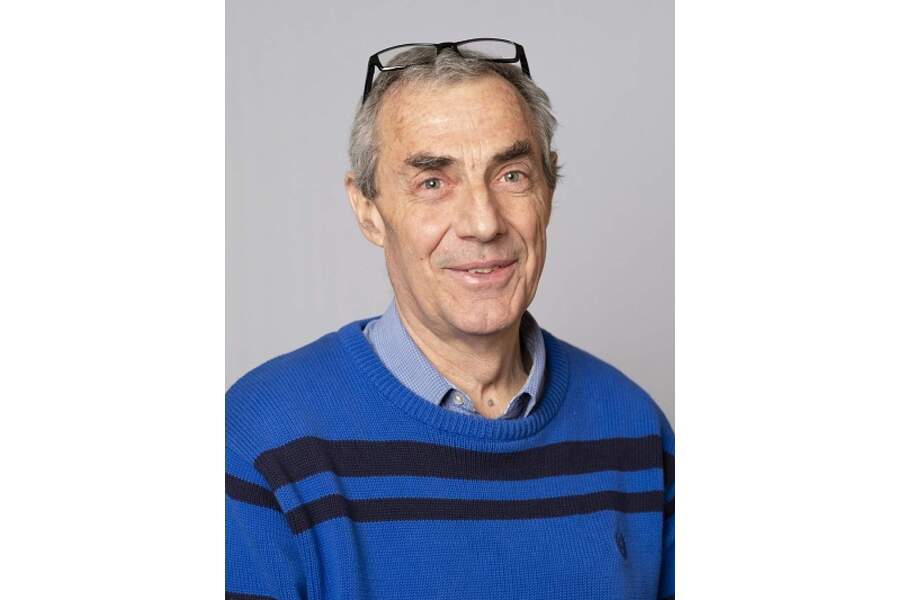
Wed, Oct 7 — Jaron Wallace

Jaron Wallace publicity image

Time: 4 pm
Location: C215 ESC

Nuclear in Utah: What’s Happening at the Utah San Rafael Energy Lab

Utah is emerging as an important location for the development and demonstration of advanced energy technologies, but much of this work remains unfamiliar outside the industry. This talk will provide an overview of Utah’s evolving energy strategy, the role nuclear power may play in meeting the state’s growing energy needs, and the projects currently underway at the Utah San Rafael Energy Lab in Orangeville. The presentation will explore how USREL is helping bridge the gap between early-stage research and commercial deployment through materials characterization, molten-salt research, engineering support, and facilities for testing and demonstrating advanced nuclear technologies. It will also discuss the scientific, regulatory, workforce, and infrastructure challenges involved in bringing a new nuclear technology from the laboratory into the field. Finally, the talk will highlight the expanding career opportunities available to physicists and other technical professionals as Utah builds a broader advanced-energy research and commercialization ecosystem.  

Biographical Sketch:

Dr. Jaron Wallace is the Director of the Utah San Rafael Energy Lab, a State of Utah research and demonstration facility supporting the development and deployment of advanced energy technologies. He earned a Ph.D. in Chemical Engineering from Brigham Young University and a bachelor’s degree in Metallurgical Engineering from the University of Utah, with professional experience spanning nuclear thermal-hydraulics, process modeling and control, molten-salt systems, and experimental energy research. As Director, he has led the expansion of USREL’s staff, facilities, scientific capabilities, and partnerships with companies developing advanced nuclear and other emerging energy technologies.  

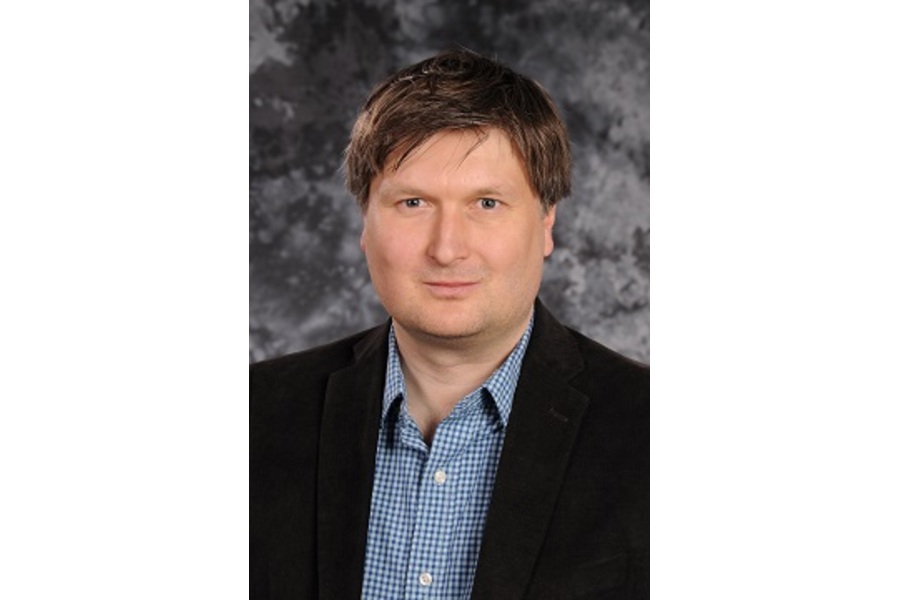
Wed, Oct 14 — Wes Campbell

Wes Campbell publicity image

Affiliation:UCLA
Time: 4 pm
Location: C215 ESC or Live Online

Quantum Error Correction with Trapped Atomic Ions

Quantum information processing with atomic qubits typically proceeds by identifying two energy eigenstates in each atom to serve as the basis for qubits.  The atoms, however, have far more internal quantum states than this, and can therefore store and process far more than one qubit each, at least in principle.  Since these resources already exist in atomic processors, I will discuss ways they might be used more efficiently.  In particular, this suggests the idea of using each atom as a so-called logical qubit, which is a qubit that can recover from errors.  As compared to the current paradigm in which many atoms are required per logical qubit, the idea of single-atom logical qubits is attractive, and I will outline some of the requirements and ideas for how this might become a reality.

Biographical Sketch:

Some years after receiving a prestigious certificate for “Excellent participation in Science” in Mrs. Borgmann’s 1st grade class, Wes Campbell completed his dissertation on trapped molecules at Harvard and became a postdoc at the JQI working with trapped ions.  Since starting UCLA, Wes’s group has been focusing on the development of a few new tools for trapped ion and molecular quantum information processing and basic science.

Wed, Oct 21 — Tyler Mix

Tyler Mix publicity image

Affiliation:Los Alamos National Laboratory
Time: 4 pm
Location: C215 ESC

Advances in Laser-Based Radiography for Nondestructive Evaluation

X-ray radiography is the main pillar of the nondestructive testing program at Los Alamos National Laboratory. We inspect thousands of parts per year, analyzing them for internal structural anomalies that could affect performance. Standard commercially available X-ray systems at MeV energies are based on small linear electron accelerators. The main drawback of this method is the large spot size at which the X-rays are emitted, because in a CT scan, the spot size of the system is directly related to the size of the anomalies that are detectable. A radiography system based on optical lasers can achieve X-ray spot sizes that are an order of magnitude smaller. However, laser-based radiography presents its own set of challenges, which must be evaluated, understood, and mitigated before deployment. This talk summarizes several years of work at multiple laser facilities worldwide to perfect laser-based radiography techniques for Los Alamos National Laboratory.

Biographical Sketch:

Dr. L. Tyler Mix grew up on the east coast but has steadily migrated to the mountains. He earned his B.S. in Chemistry from Brigham Young University in 2012, followed by a Master's degree in 2013 under Dr. Eric Sevy. He completed his Ph.D. at UC Davis under Dr. Delmar Larsen, studying ultrafast spectroscopy and the dynamics of photoactive proteins. In early 2019, Dr. Mix joined Los Alamos National Laboratory, where he is now a full staff scientist in V-6, the Nondestructive Testing and Evaluation group. He leads the maintenance, operations, and data analysis for four X-ray tomography systems as the group's system engineer. He also plays a key role in mentoring new staff and student interns in tomography methods. As the group's expert in lasers and optics, his research into novel X-ray techniques takes him to PW-class laser facilities worldwide. 

Wed, Oct 28 — Dennis Parker

Dennis Parker publicity image

Affiliation:University of Utah
Time: 4 pm
Location: C215 ESC or Live Online

Wed, Nov 18 — Krzysztof Gofryk

Krzysztof Gofryk publicity image

Affiliation:Idaho National Lab
Time: 4 pm
Location: C215 ESC or Live Online

Wed, Dec 2 — Ed Galindo

Time: 4 pm
Location: C215 ESC

Physics Education

All are welcome to attend. Speakers generally keep presentations accessible to undergraduate physics students.