Group Meetings
| Title | Time | Day | Room |
|---|---|---|---|
| Neilsen Hydroacoustics Research Meeting | 3 pm | F | N288 |
Data Science Faculty Members
John Colton

Research Specialty: Optical spectroscopy of semiconductors, with an emphasis in spin properties and semiconductor nanostructures
Contact
- Office: N335 ESC
- 801.997.0572 (office)
- 801.422.5286 (lab)
- 801.358.1970 (mobile)
- john_colton@byu.edu
- physics.byu.edu/research/coltonlab/
Research Projects
-
2D metal-halide perovskites for solar applications
"2D hybrid organic-inorganic metal halide perovskites" are a recently discovered class of semiconductors being studied in the hopes of developing highly efficient, low-cost, stable solar cells. Metal and halogen (group VII) atoms bind together in 2D layers, which are then stacked together via organic linker molecules. We are studying these interesting and important materials through optical absorption, electric field-modulated absorption, photoluminescence (fluorescence), time-dependent photoluminescence on nanosecond time scales, and dielectric spectroscopies. This allows us to determine important properties of the electrons inside these materials, to make better photovoltaic materials.
Suitable for- Undergraduate students
- Graduate students
- REU students
-
Nanoparticles as temperature sensors
We're working with a mechanical engineering professor (Troy Munro) to use semiconductor nanoparticles as temperature sensors. The wavelengths of light present in the nanoparticles' photoluminescence (aka fluorescence), and the time it takes for the luminescence to be emitted after the electrons have been excited both depend on the temperature. By characterizing the nanoparticles’ photoluminescence spectrum in both wavelength and time as a function of temperature, we hope to be able to use the nanoparticles as non-invasive temperature sensors in e.g. medical applications. For example, one could use the optical emission from nanoparticles injected into tissue to monitor temperatures as focused ultrasound is used to heat up and destroy tumors.Suitable for
- Undergraduate students
- Graduate students
- REU students
Dennis Della Corte

Research Specialty: Computational Protein Design, Molecular Dynamics Simulations, ForceFields calculations, precompetitive pharma industry consortia
Contact
- Office: N361 ESC
- 801.422.7834 (office)
- 801.949.6827 (mobile)
- dennis.dellacorte@byu.edu
- physics.byu.edu/research/dellacortelab/about
Research Projects
-
Protein Engineering
We develop and apply AI methods to the design of proteins.
Suggested Preparation:Python programming.
Structural biology (know your amino acids).
Suitable for- Undergraduate students
- Graduate students
-
Data Science in Nutrition
We develop data science tools to understand the link between dietary intakes and health outcomes.
Suggested Preparation:Statistics.
Python/R.
Suitable for- Undergraduate students
- Graduate students
-
AI in Medicine
We train AI models for applications in the medical field, particular emphasis on automatic prostate cancer diagnosis.
Suggested Preparation:Python.
Machine Learning (CS 474).
Suitable for- Undergraduate students
- Graduate students
Gus Hart
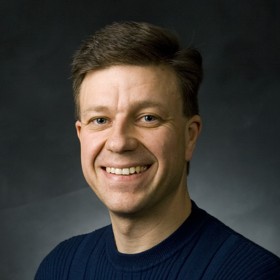
Research Specialty: Machine Learning, Modeling and Simulation, Biophysics
Contact
- Office: N267 Eyring Science Center
- gus.hart@byu.edu
Research Projects
-
Image AI for bacterial tomograms
We are developing AI to identify nanostructures inside of bacteria. In collaboration with Grant Jensen's lab (who has about 40,000 images taken over 20 years) we are working to understand basic life processes. Our focus includes some "standard" computer vision methods as well as new methods based on neural networks, transformers, etc. We also collaborate with Bryan Morse's lab in CS.
Suggested Preparation:A work ethic, excitement for research, the ability to balance research and homework, enthusiasm for new things, the desire to contribute positively to a team. Programming and software skills or the desire to develop them. Enthusiasm for math and more math.
Suitable for- Undergraduate students
- Graduate students
- REU students
Traci Neilsen
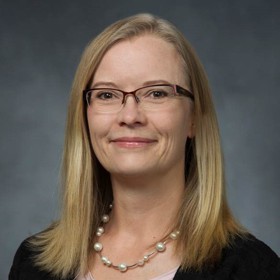
Research Specialty: Underwater acoustics, Acoustic source localization, Inverse methods, Machine learning applications in underwater acoustics
Contact
- Office: N269 ESC
- 801.422.7056
- traci.neilsen@byu.edu
- hydroacoustics.byu.edu/
Research Projects
-
Computational Underwater Acoustics
Sound propagation in the ocean depends on the properties of the water column, seafloor, and acoustic source. Our research uses physics-based acoustic models, sensitivity analysis, information geometry, optimization, and machine learning to determine what environmental properties can be inferred from recorded sound. Current projects use ship-noise spectrograms and other acoustic data in deep learning algorithms to estimate seabed properties, characterize sediment heterogeneity, improve source ranging and localization, ocean sound classification, and quantify uncertainty in these inferences.
Students gain experience in numerical modeling, scientific computing, signal processing, inverse problems, optimization, and deep learning—valuable preparation for careers in industry, national laboratories, and graduate study.
Suggested Preparation:Desire to learn about acoustics and dive into numerical modeling and/or machine learning.
Computer coding experience is helpful. This project uses Python.
Suitable for- Undergraduate students
- Graduate students
- REU students
-
Underwater Acoustical Measurements
Our underwater acoustics laboratory in U117 includes a fully automated, 12-foot-long by 4-foot-wide water tank for making controlled ultrasonic acoustic measurements. We use these measurements to test and refine numerical models of sound propagation, study the effects of temperature-driven sound-speed variability, and evaluate source-ranging, localization, transfer-learning, and other machine-learning methods.
Students work with acoustic sources and hydrophones, robotic positioning systems, measurement protocols, signal processing, and experimental data analysis. This experience provides excellent preparation for graduate study in acoustics, ultrasound, medical physics, and related fields, as well as for technical careers requiring experimental and computational skills.
Suggested Preparation:Desire to learn
Attention to detail
Suitable for- Undergraduate students
- Graduate students
- REU students
Darin Ragozzine
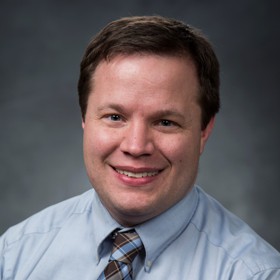
Research Specialty: Planetary Science, Astrophysics, Exoplanets, Astrostatistics
Contact
- Office: N482 ESC
- 801.422.2207
- darin_ragozzine@byu.edu
Research Projects
-
Studying the Architectures of Exoplanetary Systems
Like our Sun, other stars are known to host planetary systems. As we continued to discover many more exoplanetary systems, we learn about how these systems are put together. The "architecture" of these systems (are small planets on the inside or outside? how close are the planets to each other? etc.) gives us invaluable clues to the formation of planetary systems. I used state-of-the-art statistical and computational techniques to discover new exoplanetary systems, study existing systems, and remove the biases on their properties from our limited observational methods. There are a variety of projects available at a variety of levels and you'll be paid as Research Assistants. Please contact me for more information. The best time to contact me about available positions is about 1 month before the beginning of a semester.
Suggested Preparation:No skill is absolutely necessary, but the following will increase the complexity of the project you can take on: scientific computing; introductory physics, astronomy, and/or planetary science; statistics; upper-level mechanics; etc. I generally require students to complete Physics 227 and CS 111 before joining my group. In addition, research in general requires a passion for science and the desire to solve complex problems on your own.
Suitable for- Undergraduate students
- REU students
-
Orbits in the Outer Solar System
(No positions open until Fall 2023.) Beyond the orbit of Neptune lies a population of icy bodies whose orbits can reveal unique information about how our solar system formed. This region of the solar system is called the Kuiper Belt and these small icy bodies are called Kuiper Belt Objects (KBOs or sometimes Trans-Neptunian Objects or TNOs), though some are large enough to also qualify as "dwarf planets" like Pluto and Haumea. There are multiple projects available in my research group to study KBO satellites (e.g., Haumea's moons) and KBO orbits (e.g., the Haumea and other collisional families). There are a variety of projects available at a variety of levels and you'll be paid as Research Assistants. Please contact me for more information. The best time to contact me about available positions is about 1 month before the beginning of a semester.
Suggested Preparation:No skill is absolutely necessary, but the following will increase the complexity and meaningfulness of the project you can take on: scientific computing; introductory physics, astronomy, and/or planetary science; statistics; upper-level mechanics; etc. In addition, research in general requires a passion for science and the desire to solve complex problems on your own.
Suitable for- Undergraduate students
- REU students
Denise Stephens
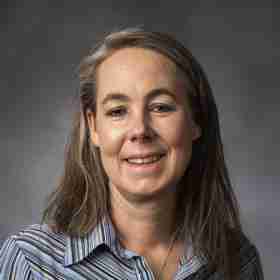
Research Specialty: Brown Dwarfs, Transiting Planets, IR Observing, Space Telescopes
Contact
- Office: N486 ESC
- 801.422.2167
- denise_stephens@byu.edu
Research Projects
-
Infrared Spectra and Photometry of Brown Dwarfs - Fitting to Models
- Use IDL to reduce spectra of brown dwarfs taken with Triplespec on the ARC 3.5 meter telescope.
- Use astropy tools to reduce photometry taken with NICFPS on the ARC 3.5 meter.
- Reduce JWST spectra with existing python tools.
- Write python codes to reduce data, create theoretical models, and fit the models to the data in order to do higher order data analysis.
Suggested Preparation:- Must have experience with python, jupyter notebooks, numpy, matplotlib, and show examples of programs you have written in the past in order to work on this project.
- Must have strong coding skill.
- Must be able to read and understand documentation, and act and learn on that documentation with little to no oversite.
- Must be self-motivated to work on your own.
- Must attend weekly research meetings and be ready to share results and next steps.
Suitable for- Undergraduate students
- Graduate students
- REU students
-
Transiting Exoplanets
Take data with the 24" telescope on the roof of the Eyring Science Center of stars that may have transiting planets. Reduce this data using astropy and AstroimageJ software. Characterize the radius of the planet (if we see a transit) by fitting the transit light curve. Return results to the team so that we can either obtain further observations of a possible planet candidate or expire the target as spurious or an eclipsing binary star system.
Suggested Preparation:Available in the evenings to observe and willing to learn how to use the 24" telescope and the deck telescopes.
Knowledge of IRAF and AstroimageJ data reduction tools.
Suitable for- Undergraduate students
- REU students