Group Meetings
| Title | Time | Day | Room |
|---|---|---|---|
| Della Corte Protein Engineering | 3 pm | W | N288 |
| Gibbs Lab Meeting | 4 pm | Th |
Biophysics Faculty Members
Robert Davis
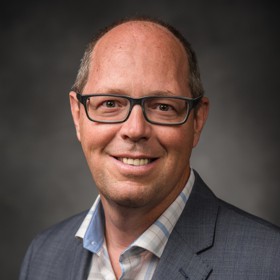
Research Specialty: Applied Micro and Nanoscale Materials
Contact
- Office: N281A ESC
- 801.422.6159 (lab)
- 801.885.7070 (mobile)
- davis@byu.edu
- nano.byu.edu
Research Projects
-
Biomolecular Electronics
Carbon nanotubes, proteins and nucleic acids are candidate structures for self assembled molecular electronic materials for sensing and the internet of things. .Suitable for
- Undergraduate students
- Graduate students
- REU students
-
Nanostructures and Micromachines
We are developing three dimensional microscale structures from vertically grown nanotube forests. We are using films of carbon atoms, few atoms thick, to make ultrastrong materials.Suitable for
- Undergraduate students
- Graduate students
- REU students
-
Biological Separations
This work is focused on capture of cells and molecules using precision filters for the detection of cancer and antibiotic resistant bacteria.Suitable for
- Undergraduate students
- Graduate students
Dennis Della Corte
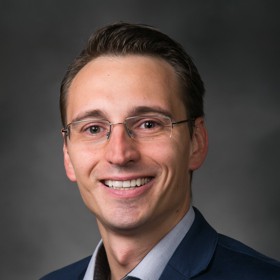
Research Specialty: Computational Protein Design, Molecular Dynamics Simulations, ForceFields calculations, precompetitive pharma industry consortia
Contact
- Office: N361 ESC
- 801.422.7834 (office)
- 801.949.6827 (mobile)
- dennis.dellacorte@byu.edu
- physics.byu.edu/research/dellacortelab/about
Research Projects
-
Protein Engineering
We develop and apply AI methods to the design of proteins.
Suggested Preparation:Python programming.
Structural biology (know your amino acids).
Suitable for- Undergraduate students
- Graduate students
-
Data Science in Nutrition
We develop data science tools to understand the link between dietary intakes and health outcomes.
Suggested Preparation:Statistics.
Python/R.
Suitable for- Undergraduate students
- Graduate students
-
AI in Medicine
We train AI models for applications in the medical field, particular emphasis on automatic prostate cancer diagnosis.
Suggested Preparation:Python.
Machine Learning (CS 474).
Suitable for- Undergraduate students
- Graduate students
Eric Gibbs

Research Projects
-
Structure and Function of Neurotransmitter Transporters
A synaptic event is when neurotransmitters, often small molecules, are released from lipid vesicles (synaptic vesicles) that were stored in "presynaptic" neurons into the gap between neurons. The transmitters then interact with receptors on the "postsynaptic" neuron. Signal termination and preparation for the next synaptic event often requires neurotransmitters to be cleared from the synaptic space and, in many cases, transported back into the presynaptic neuron and eventually reloaded into synaptic vesicles. Specialized proteins called transporters use ion gradients to drive neurotransmitter uptake, allowing neurotransmitters to accumulate in the presynaptic neuron against their electrochemical gradient. Both the activity and subcellular localization of transporters are critical to neuronal signaling and the effects of many clinical and recreational drugs, for example anti-depressants and stimulants, are mediated by their impact on transporter activity.
From a physics perspective, the function of transporters can be seen as cycling through various conformational states and the relative energies of these states depend on substrate and ion occupancy. By using cryo-EM and complementary techniques, we determine the structure of transporters in different states and better understand how the energetics of different states relate to transporter activity. This will give insight to how transporters operate and even inform strategies for selectively modulating transporter activity.
The location and number of transporters also impact the neuronal signal. As such, neurons have developed mechanisms to move transporters between the outer cell membrane and internalized lipid compartments where they are sorted for reuse, storage, or degradation. A vast array of protein and lipid interactions govern this dynamic exchange, and our group is interested in the physical principles underlying them.
Suggested Preparation:-A general interest in both molecular physics and biology
-A willingness to learn both wet lab and computational techniques
Suitable for- Undergraduate students
- Graduate students
Gus Hart
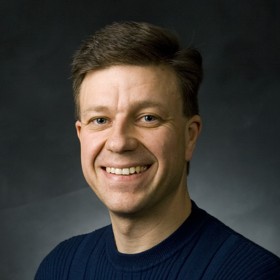
Research Specialty: Machine Learning, Modeling and Simulation, Biophysics
Contact
- Office: N267 Eyring Science Center
- gus.hart@byu.edu
Research Projects
-
Image AI for bacterial tomograms
We are developing AI to identify nanostructures inside of bacteria. In collaboration with Grant Jensen's lab (who has about 40,000 images taken over 20 years) we are working to understand basic life processes. Our focus includes some "standard" computer vision methods as well as new methods based on neural networks, transformers, etc. We also collaborate with Bryan Morse's lab in CS.
Suggested Preparation:A work ethic, excitement for research, the ability to balance research and homework, enthusiasm for new things, the desire to contribute positively to a team. Programming and software skills or the desire to develop them. Enthusiasm for math and more math.
Suitable for- Undergraduate students
- Graduate students
- REU students
Micah Shepherd
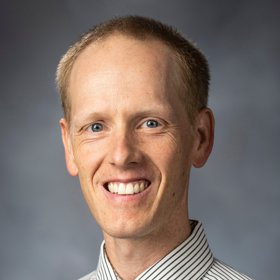
Research Specialty: Structural Acoustics, Musical Acoustics, Analysis of Wave or Wave-like Data
Contact
- Office: N488 ESC
- 801.422.1498
- shep@physics.byu.edu
Research Projects
-
Vibration-based Sound Power
1) Expand the vibration-based sound power method to unbaffled plates
2) Measure the vibration of plates with different geometries using laser vibrometry
Suitable for- Undergraduate students
- Graduate students
- REU students
-
Physics of Musical Instruments
1) Perform high resolution measurements of the directivity of musical instruments, especially percussion and string instruments
2) Develop physical models of the vibration and sound radiation of string instruments
3) Investigate of nonlinear behavior in cymbals
Suitable for- Undergraduate students
- Graduate students
- REU students
-
Signal Characterization of Seizures
1) Study the mechanisms of seizure propagation and termination in mice models through the development of advanced analysis and visualization techniques
2) Characterize the onset of moderate and severe seizure events using machine learning
This research is performed in collaboration with Dr. Ryley Parrish from BYU's College of Life Science.
Suitable for- Undergraduate students
- Graduate students
- REU students
-
Launch Vehicle Acoustics
1) The use of acoustic intensity in the near- and far-field of a rocket to localize the acoustic source as a function of frequency.
2) The use of model-scale rockets to better understand the acoustic behavior of full-scale rockets.
Suitable for- Undergraduate students
- Graduate students
- REU students
-
Thermoelasticity
1) Measure thermoelastic damping in plates and beams of various metals with differing thickness profiles
2) Investigate the temperature dependence of thermoelastic damping in metal beams
3) Explore the relationship between thermoelastic damping and material grain structure
Suitable for- Undergraduate students
- Graduate students
- REU students