Professors present acoustics research at national meetings in SLC
Why are BYU professors and scientists from around the nation gathering to discuss yodeling, crackling and hearing? Scientists will be gathering to present and discuss their latest acoustics research at the Acoustical Society of America’s 153rd meeting.
The conference will take place at the Hilton Salt Lake City Center June 4-8. More than 650 papers will be presented, 10 with ties to Brigham Young University.
· Snap, Crackle, Pop! And we’re not talking about the breakfast cereal. At an air show, the high-pitched, staccato-like “crackle” is really coming from an F-16 when its engine is at or near maximum thrust. Kent L. Gee, BYU Physics and Astronomy professor, will present his paper Wednesday, June 6 at 8:30 a.m. in Canyon Room A.
· Listening to the earth through seismic exploration. Geologists John McBride and William Keach present how they train students in seismic imaging to do things such as petroleum prospecting and earthquake hazard assessment. Wednesday, June 6 at 9:05 in Grand Ballroom A.
· Do you hear what I hear? A device has been created to show the properties of human hearing. The device can also show beating and masking, among other activities, that occur on the basilar membrane, which is the base for the sensory cells of hearing. BYU student Seth Tomlinson will demonstrate this device on Wednesday, June 6 at 9:35 a.m. in the Alpine West room.
· What does science have to do with lederhosen clad, Swiss yodelers? Bill Strong, emeritus professor of physics, will be presenting the art and science of yodeling, featuring a professional yodeler, on Tuesday, June 5 at 4:15 p.m. in the Alpine West room.
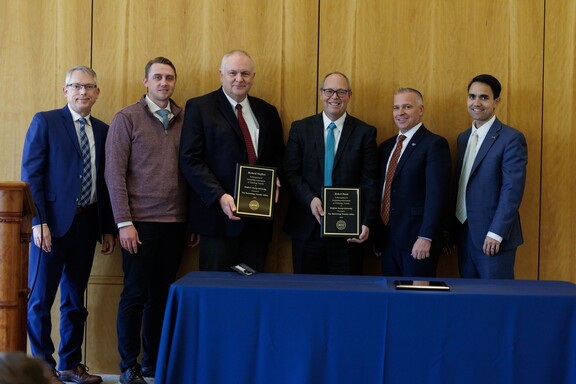
At the conference, Strong will also receive the Rossing Prize in Acoustics Education to recognize an outstanding career teaching and developing educational materials.
For more information about other BYU professors presenting at the conference, visit //asa.aip.org/asasearch.html and type “BYU” or “Brigham Young University” in the search query.
Writer: Elizabeth Cramer
More Information on This Article
News and Events